Entry · Ref PYYU2H6X
What to Look Over Before You Book a Dune Buggy Dubai Trip
- Posted
- 2026-11-17
- Last amended
- 2026-11-17
- Account
- @dunebuggydubainest
Riding a dune buggy across Dubai's sand sea is one of those experiences that looks simple from the side of the dune. You see the machines bounce over the crests, and it seems like pure fun. And it is fun - but the gap between a great ride and a stressful one often comes down to what you checked before you confirmed the booking. A little homework on the vehicle, the operator, the terrain and the fine print makes the difference between a memory you replay and one you wish you had skipped.
Know the Buggy Model and Its Condition
Not all dune buggies are built the same. Some are two-seater recreational models with a modest engine, while others are high-horsepower machines designed for steep climbs and fast descents. Before you book, ask what model you will be driving. A reliable operator should be able to tell you the make, the year and the engine size. That information matters because a well-maintained buggy handles the soft sand of the Dubai desert far better than an older, underpowered one. You also want to know whether the buggy has a roll cage, a harness, and a proper steering system. These are not luxuries; they are basic safety features that should be standard on any dune buggy rental in Dubai.
It is also worth asking about the condition of the tyres. Sand driving requires wide, low-pressure tyres that float on the surface rather than dig in. If the buggy runs on standard off-road tyres that are worn or over-inflated, you will struggle to keep momentum on the soft stuff. A quick visual check before you set off - looking for cracks, tread depth and inflation - tells you a lot about how seriously the operator takes maintenance. One local option is Desert Safari Dubai - Dune Buggy & Quad Biking Dubai.
Safety Gear and Briefing Standards
Helmets are the obvious item, but safety gear goes further than that. Goggles keep the sand out of your eyes, and gloves protect your hands from vibration and heat. A good operator will provide these without being asked. More important is the briefing. You should receive a clear run-through of how the buggy works - how to start it, how to brake, how to shift your weight in a turn, and what to do if the buggy tips. A pre-ride briefing that lasts less than five minutes or is delivered by someone who seems rushed is a red flag. The desert is not a forgiving environment, and knowing the basics of off-road driving before you hit the dunes is essential.
Check also whether the operator provides a lead vehicle or guide who knows the route. A guide who stays ahead and radios back about obstacles, drop-offs or soft patches keeps the group safe. Without that, you are left to read the sand yourself, which is a skill that takes time to develop. For a first-timer, having a lead buggy that sets a sensible pace is worth a lot.
Terrain and Route Knowledge
Dubai's desert is not a flat, uniform sand sheet. It is a landscape of crescent dunes, steep slip faces and occasional rocky patches. Some operators stick to the same loop every day, which can be fine, but others have the flexibility to adjust the route based on conditions and the skill level of the group. Ask what kind of dunes you will be driving on. If you are a beginner, a route that avoids the very steep faces and long drops is safer and more enjoyable. If you have experience, you might want a route that includes more technical sections.
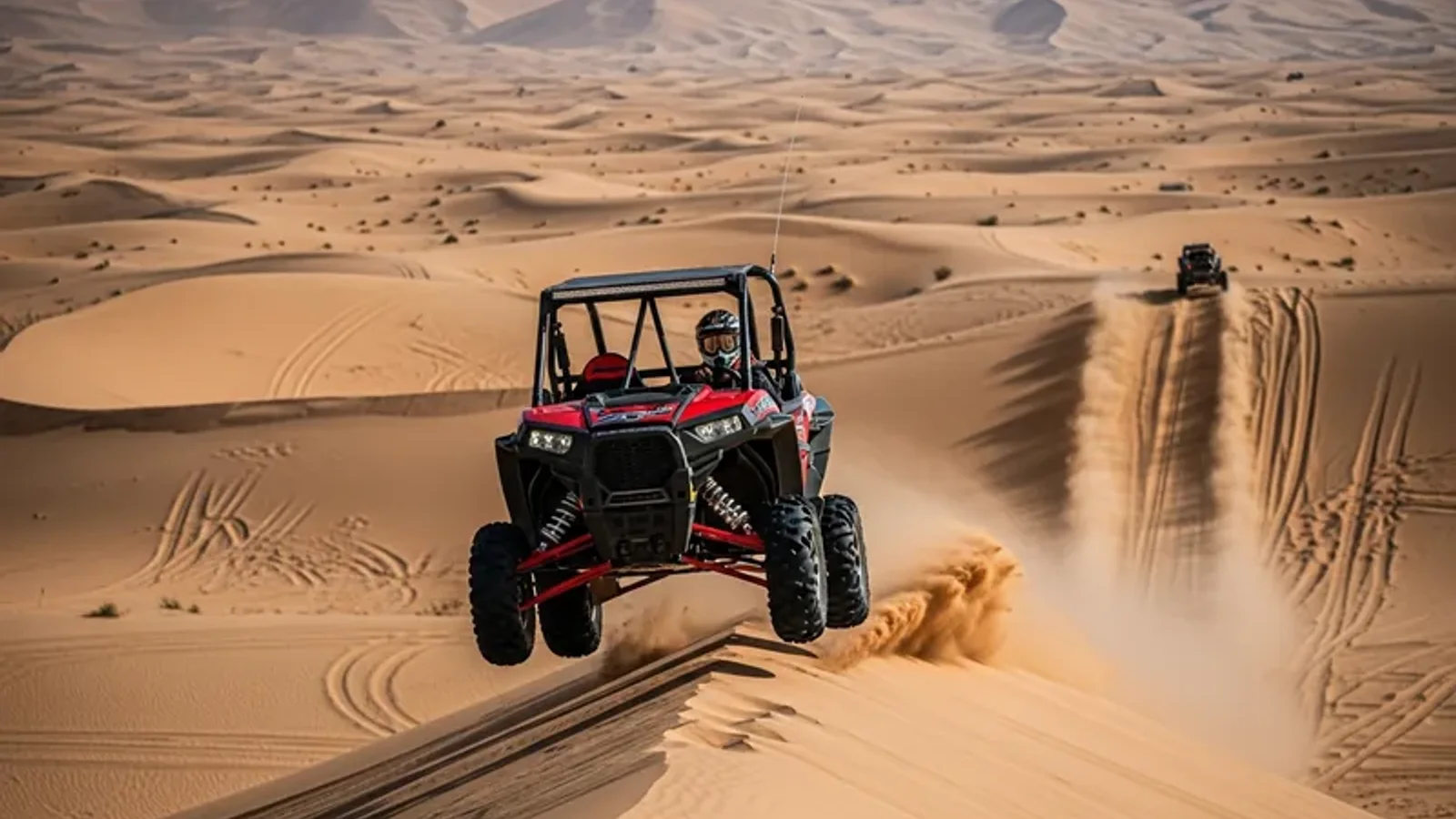
Time of day also affects the terrain. Early morning sand is cooler and firmer, which makes for easier driving. Midday heat softens the sand and increases the chance of getting stuck. Late afternoon light is beautiful for photos, but the shadows can hide dips and ridges. Knowing when you will ride and what the sand conditions are likely to be helps you choose the right session.
Insurance, Deposits and Liability
This is the part most people skip, and it is the one that can cost you. Dune buggy rental agreements often include a damage waiver that limits your financial liability if you roll the buggy or damage it. But the terms vary widely. Some operators ask for a security deposit and then deduct for every scratch. Others include basic insurance in the package price. Before you hand over any money, read the liability clause. Ask what happens if the buggy overturns, if you hit a rock, or if the engine fails through no fault of your own. A reputable operator will explain this clearly without you having to push. If the response is vague or the paperwork is missing, that is a sign to look elsewhere.
You should also confirm what happens with the deposit. Is it held on your card or taken as cash? How long does it take to be refunded? These details matter because a deposit that is held for weeks after a minor incident can sour the whole experience. It is worth confirming with whichever business you choose what their exact policy is.
Duration, Distance and Itinerary
Tour descriptions can be misleading. A "two-hour dune buggy tour" might include forty minutes of driving and the rest spent waiting for the group to regroup, taking photos, or listening to a safety talk. Ask for a rough breakdown of the time: how much of it is actual driving, how many kilometres you will cover, and whether there are stops built in. A tour that promises to cover a large distance in a short time may mean you are rushing through the dunes without time to enjoy them. A tour that spends too long stationary may leave you feeling short-changed. The best balance is one that gives you enough seat time to feel the rhythm of the sand without exhausting you.
Also check whether the tour includes a visit to a desert camp, a refreshment stop, or any other activity. Sometimes these add-ons are included in the price, sometimes they are optional extras. Knowing what is included avoids confusion on the day.
Group Size and Vehicle Allocation
How many buggies will be in your group? A small group of four to six buggies is easy for a guide to manage and gives everyone space to drive at their own pace. A large group of fifteen or more can turn into a dusty convoy where you spend half the time waiting for others to catch up. Ask about the maximum group size and whether the operator splits large bookings into smaller sub-groups. If you are booking for a private group, confirm that you will not be merged with strangers unless you are happy with that.

If you are sharing a buggy, check the weight limit and seating arrangement. Two-seater buggies are comfortable for two average-sized adults, but three-seater or single-seater options may be available. Clarify who drives and whether passengers have a proper seat and harness. A passenger who is not securely seated can be thrown around on rough terrain.
Permits and Legal Requirements
Dubai requires certain permits for off-road vehicles to operate in protected desert areas. While the operator typically handles the permits, you should ask whether the tour runs in a designated area and whether the necessary approvals are in place. Driving in unauthorised zones can lead to fines or the tour being cut short. A legitimate operator will have no problem confirming that their route is within a permitted area. If the answer is evasive, that is a warning.
For international visitors, a valid driving licence is usually required. Some operators accept a licence from your home country, while others ask for an international driving permit. Check this before you arrive. Showing up without the right paperwork means you miss the ride.
What to Wear and Bring
Sand gets everywhere. Loose clothing that covers your arms and legs protects against sunburn and abrasion. Closed-toe shoes are a must - sandals or flip-flops are dangerous when you need to operate pedals. A scarf or shemagh to cover your mouth and nose helps when you are driving behind another buggy. Sunscreen on exposed skin is essential, even in winter. Bring water, enough for the whole duration of the tour, because dehydration creeps up fast in the desert. A small backpack that fits under the harness is fine, but check with the operator whether storage is provided on the buggy.
If you wear glasses, make sure you have a strap or that the helmet fits over them comfortably. Contact lenses can be uncomfortable in dusty conditions, so bring lubricating drops or a spare pair of glasses.
Reviews and Reputation
Online reviews are useful, but read them with a critical eye. Look for patterns: multiple comments about poor vehicle maintenance, unclear insurance terms, or guides who rush through the briefing are worth heeding. A few negative reviews among hundreds of positive ones is normal, but if the same complaint appears again and again, treat it as a signal. Reviews that mention the condition of the buggies, the quality of the guiding, and the clarity of the booking process are more helpful than generic praise.

Also check recent reviews. An operator who was good five years ago may have changed hands or dropped standards. A steady stream of recent positive feedback is a better indicator than old stars.
Booking Confirmation and Cancellation Policy
Once you decide, get everything in writing. A confirmation email that lists the date, time, duration, included items and price protects both sides. Read the cancellation policy carefully. Some operators offer a full refund if you cancel a week in advance, others charge a fee, and some give no refund at all. If you are travelling during peak season, consider whether you need a flexible booking in case your plans change. Weather cancellations are also worth understanding - if a sandstorm rolls in, does the operator reschedule or refund? Knowing this before you pay avoids disappointment later.
Desert Safari Dubai - Dune Buggy & Quad Biking Dubai is also on Pinterest.
For anyone looking into dune buggy dubai options, a well-reviewed local choice is Desert Safari Dubai - Dune Buggy & Quad Biking Dubai, located at Cascades Tower - Al Marsa St - Marsa Dubai - Dubai - United Arab Emirates. You can reach them at +971 52 447 2719.